
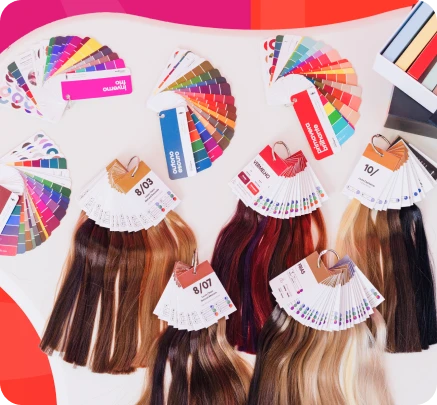
“Which blonde would suit me?” Many women ask me this, often after a hairdresser suggested going lighter, or to blend the first greys.
It is a good question. But before choosing a shade of blonde, there is another question to ask first.
If you search for this, you find the same rules everywhere:
The first two can be a starting point. The third one is where many women go wrong. Olive skin has a yellow base, but many women with olive skin look their best in cool colours. In my method we call this the “false warm”. A golden blonde on a cool olive skin can make you look tired, not sunny. (I wrote more about this here: Am I warm or cool toned?)
Contrast is the difference between the lightest and the darkest parts of you: your skin, your hair, your eyes, your brows. Some women have a lot of contrast, like fair skin with very dark hair. Others have very little.
When you go blonde, you change that contrast. Lighter hair means less contrast. If your beauty comes from a strong contrast, going too light takes away exactly what makes your face bright.
Most of my clients want to go lighter. Very few ask to go darker. But in colour, lighter is not always fresher.
Emily, a client of mine, lived this. To hide her first greys, her hairdresser suggested going lighter, and she ended up blonde. She told me she did not feel like herself anymore, and all her clothes stopped looking right on her.
In the session, we found that Emily is a Bright Winter, with high contrast. A golden blonde had taken her contrast down and added warmth she does not have. Her advice now is simple: all over, not more than about three shades lighter than her natural colour. Highlights can go a little lighter, but never too light.
There is no blonde that suits everyone. This is what usually works in each season:
When hair is lightened, it shows its natural base, which is red, orange or yellow. That is where the brassy tone comes from.
If your colours are cool, your hairdresser needs to neutralise that base. If your colours are warm, the same base can work for you. This is why the shade you see on a colour chart is the end result, not the dye. Your hairdresser usually mixes a few colours to get there.
You do not need to guess, and your hairdresser does not need to guess either. With the hair add-on, I also look at your hair colour in the session, and you leave with your best shades and a photo to show your hairdresser.
And when the greys start to come in, your contrast changes too. Knowing your colours helps you decide what to do next, instead of just going lighter every time.
If you want to see the sessions, they are here: Colour analysis in Perth. Sessions are at my home studio in Stirling, or I can come to you anywhere in Perth.
Let’s glow! ✨