
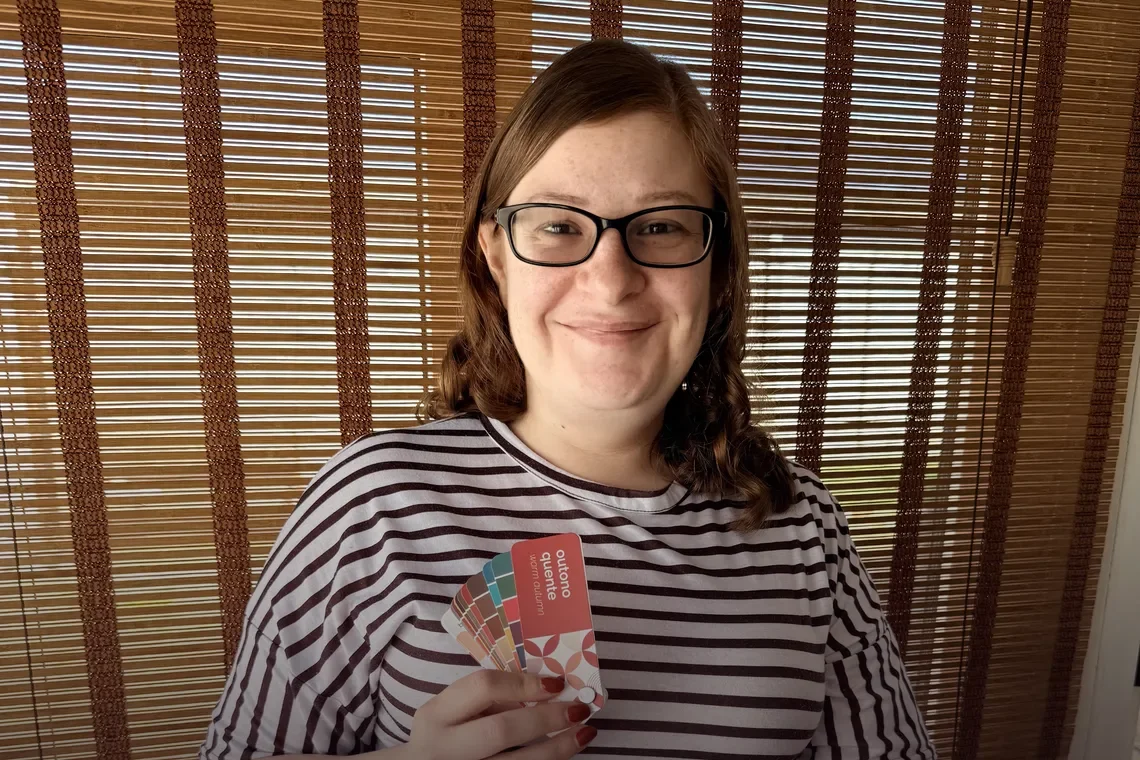
Warm Autumn is the season that looks like the trees in April here in Perth: rust, mustard, olive, deep orange, warm brown. Rich colours, full of warmth, with a soft glow instead of shine.
If you think you might be one, or a quiz told you so, here is what the Warm Autumn colour palette really looks like, what to wear, and what to leave in the shop.
Warm Autumn at a glance
What leads
Warmth
Best colours
Rust, mustard, olive, petrol blue
Avoid near the face
Hot pink, bright royal blue
Metals
Gold, copper, rose gold
Every season is a mix of three qualities: temperature (warm or cool), depth (light or dark) and intensity (soft or bright). Autumn is warm, deep and soft.
In each season, one quality leads. In Warm Autumn, it is warmth. This is why it is also called True Autumn: it is the most “Autumn” of the three Autumns.
This guide
Warm Autumn
Warmth leads. The middle one.
Next door
Soft Autumn
Softness leads. The lightest Autumn.
Next door
Dark Autumn
Depth leads. The most intense Autumn.
Warm and soft together give the colours that make this season so beautiful: burnt red, olive green, mustard.
Skin
Warm, peachy or golden, sometimes with freckles. A tan does not decide it: some Warm Autumns tan easily, others never do.
Hair
Often with a golden or coppery base, from light brown to dark.
Contrast
Usually medium to high between skin, hair and brows.
These are only signs. Many Warm Autumns do not tick every box, and some women who do are another season. (If you are not sure about your undertone: Am I warm or cool toned?)
The Warm Autumn palette I use in my sessions: 36 colours.
The palette is warm from top to bottom. Some of the colours that work best:
Greens
Olive, sage, moss.
Blues
Petrol blue and teal, the warm side of blue.
Yellows and oranges
Mustard, golden yellow, deep orange, burnt orange.
Reds
Tomato red and brick red, never a cool red.
Browns
Chocolate, cinnamon, camel.
Light colours
Cream and warm ivory, instead of pure white.
There is no black in the Warm Autumn palette. But you do not lose anything: the dark browns, the deep olive and the dark petrol blue do the same job. A chocolate brown blazer looks just as elegant as a black one, and softer on your face.
Close to your face
Warm Autumn should avoid colours that are cool and intense at the same time. The classic examples are hot pink and bright royal blue. Close to your face, they take over, and your skin can look grey or tired next to them.
Far from your face
It does not mean you can never wear them. Far from your face, on a skirt or a bag, they matter much less.
Metals
Gold, copper and rose gold. Copper is the most special one: in my method, it belongs only to the Autumns. Matte and aged finishes look better than very polished ones.
Foundation
Choose a yellow base, not a pink or grey one, with a matte finish. If your skin is more mature, a good moisturiser underneath keeps it from looking dry.
Blush and lipstick
Peach, terracotta, warm coral, brick. The same warmth as your clothes.
The Autumns are easy to mix up, because they share a lot.
Warm Autumn or Dark Autumn?
Dark Autumn is deeper and can wear black. If black looks strong and right on you, you may be Dark Autumn. If it looks heavy, Warm Autumn is more likely.
Warm Autumn or Soft Autumn?
Soft Autumn is lighter and more muted. Very rich colours like deep orange can be too much for it.
Warm Autumn or Warm Spring?
Both are warm. Spring is lighter and clearer, Autumn is deeper and softer.
(You can see all twelve seasons side by side here: What season palette am I? Or read about the opposite season: Bright Winter colour palette.)
Reading about a season is a good start, but your own eye is used to your face, and the light in your home changes the colours. In a session, I test each colour on you by comparison, under natural daylight or my calibrated mirror light, until one season keeps winning. (More about why: Why online colour tests don’t work.)
Sessions are at my home studio in Stirling, or I can come to you anywhere in Perth, and there is no deposit to book.
Let’s glow! ✨